We Tested These Organization Tips So You Don’t Have To -5 Sewing Room Organization Ideas
We Tested These Organization Tips So You Don't Have To
Finding what actually works in real UK homes with limited space
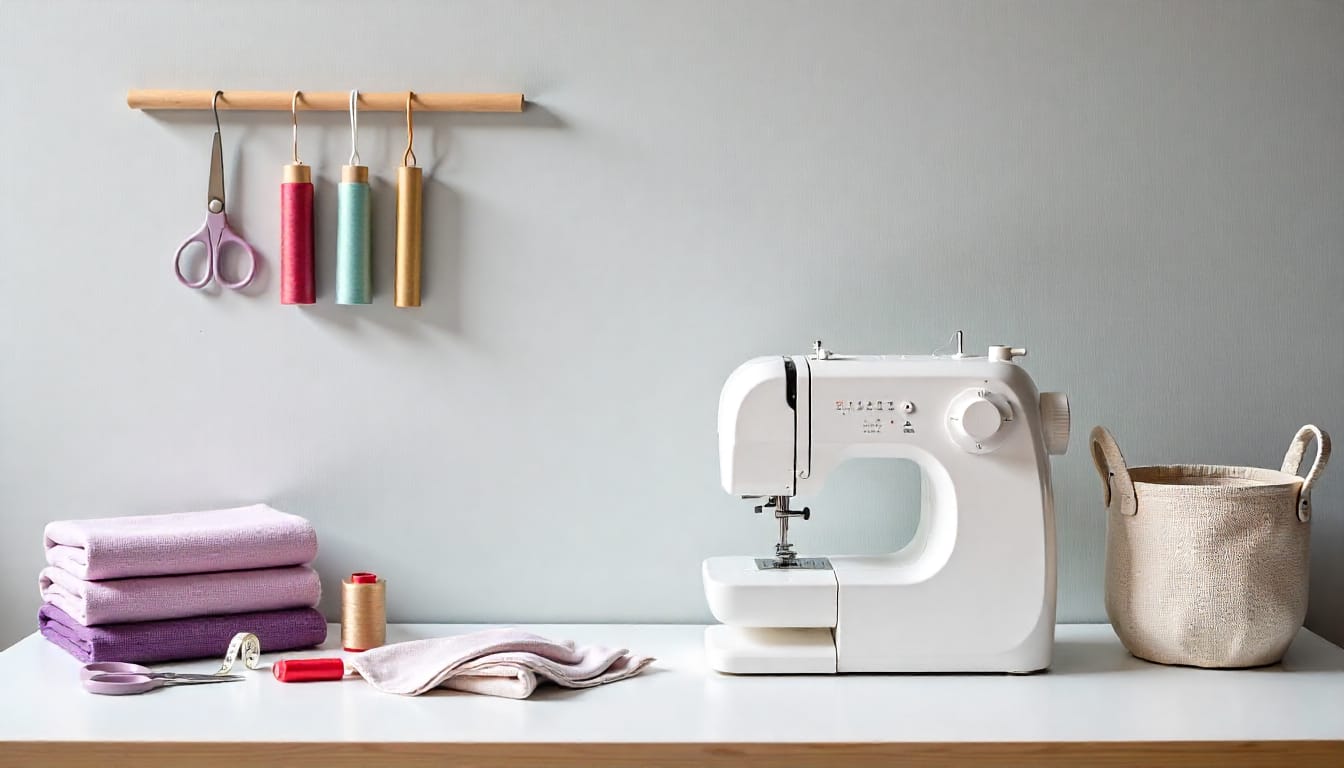
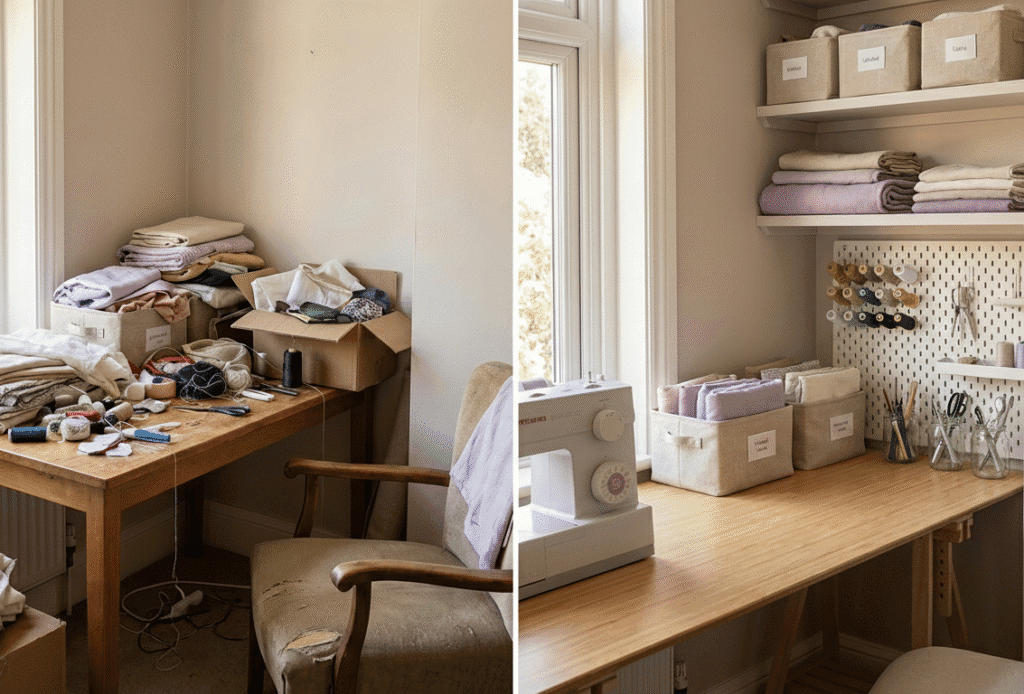
Before and after: practical sewing organisation tested in real UK homes.
A messy sewing space makes it harder to start projects.
But the problem isn’t usually the space itself—it’s the system you’re using to organize it. We tested popular organisation methods to find what works in real UK homes, where space is limited and time is short.
30+
Beginners tested with
14
Days per method
5
Methods that worked
How we tested these methods
We tried these organisation methods with 30 beginner sewists across the UK, most working in small flats or shared homes. Each method was tested for two weeks during regular sewing projects. Anything that felt hard to maintain, took too much time, or only looked good in photos was rejected.
What didn't work for beginners
We tested colour-based sorting, open shelving, and buying storage before decluttering. These methods looked good initially but failed within days because they were hard to maintain, required constant tidying, or didn’t suit small UK homes.
5 Methods That Worked Consistently
What stayed simple and practical after two weeks of use
The 10-Minute Reset Rule
Tested for 14 days straight. This habit made the most noticeable difference.
At the end of every sewing session, spend exactly 10 minutes resetting, not deep cleaning, just resetting.
What you do:
- Fold the fabric you used
- Put threads in a basket
- Return scissors and cutter to their spot
- Brush scraps into the bin
- Lay out tomorrow's tools
Result:
Tools stayed in the same place, setup time dropped, and sessions started faster. After a week, the room felt easier to work in.
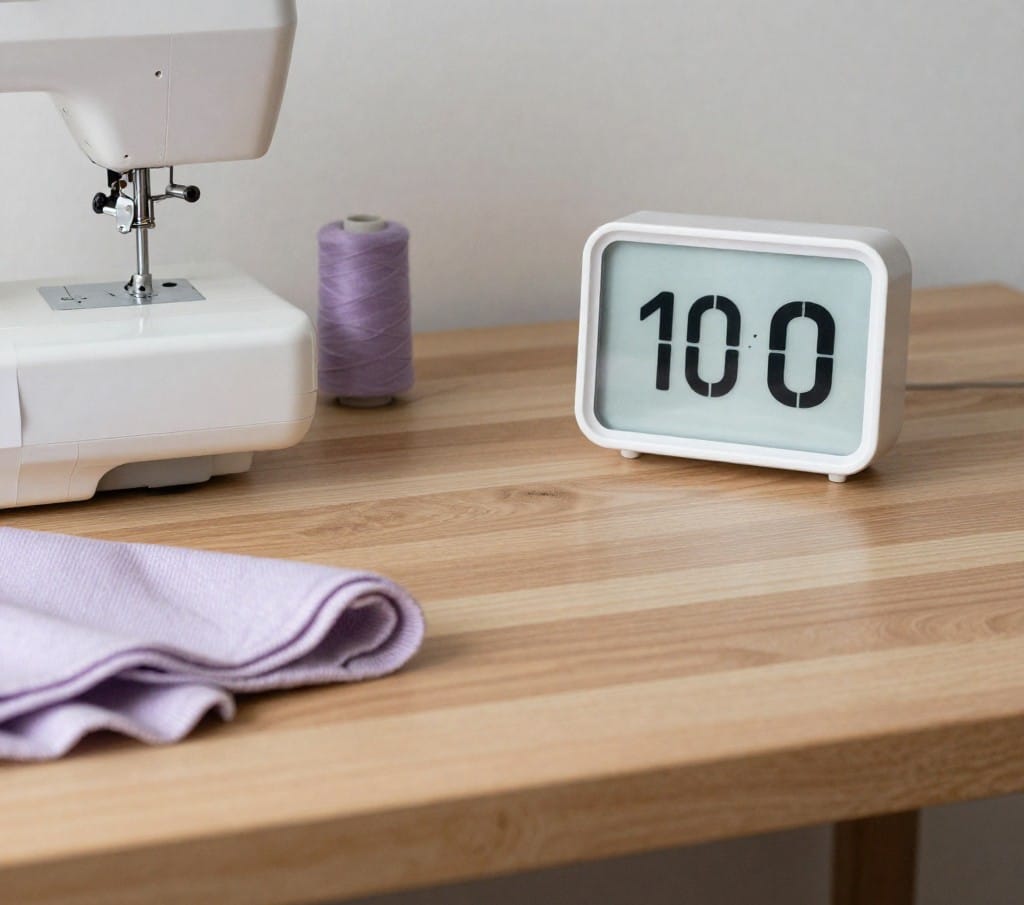
The 10-minute reset in action — a simple habit that keeps your sewing space under control.
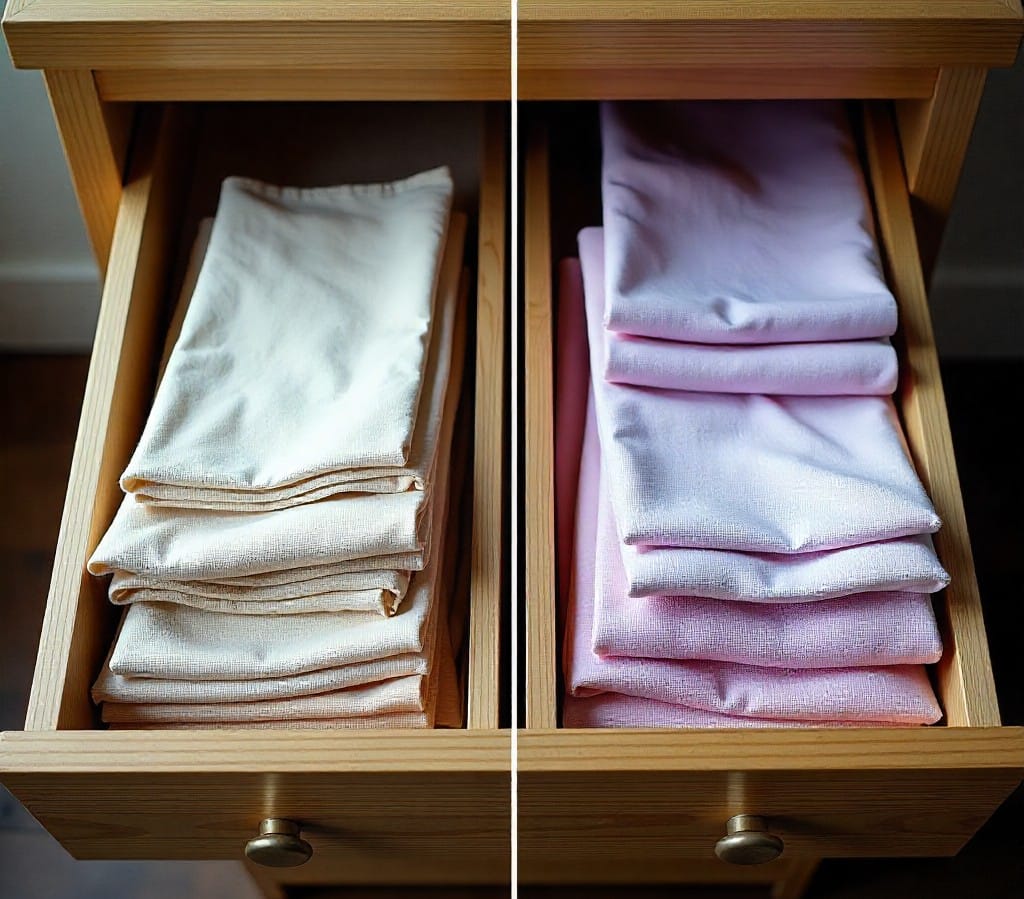
Vertical fabric storage makes every piece visible at once — reducing duplicates and keeping fabrics in better condition.
Vertical Fabric Storage
We tested stacked, rolled, and vertical folding. Vertical worked best long-term.
At the end of every sewing session, spend exactly 10 minutes resetting, not deep cleaning, just resetting.
Why vertical (KonMari-style) worked:
- See all your fabric at once
- Stop buying duplicates
- Fabric doesn't get crushed
- No heavy stack lifting
- Works in drawers, baskets, or IKEA Kallax cubes
Result:
Sort by Category, Not Color
Colour sorting looks good in photos but becomes impractical quickly.
Category sorting worked better because:
- Your brain thinks by fabric type, not shade
- You find the right fabric faster
- New purchases fit the system easily
- Less decision overwhelm
Sort into:
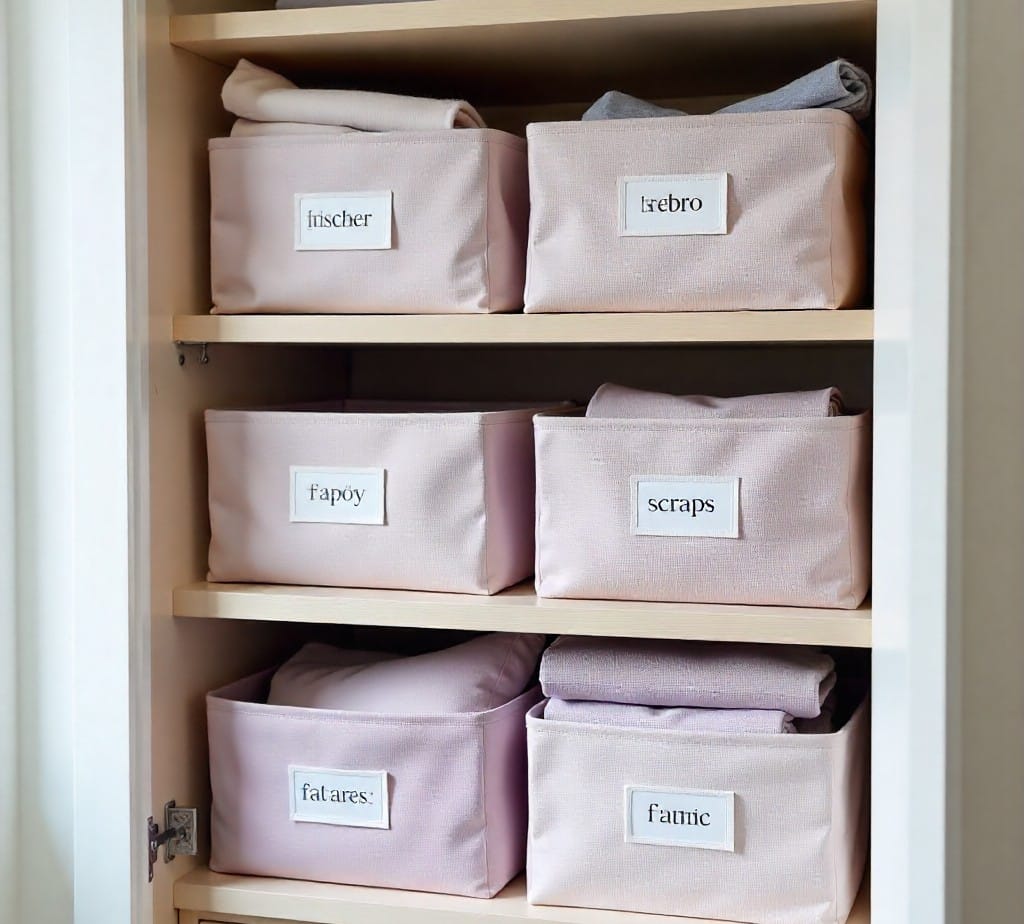
Cotton • Fleece • Jersey • Linen • Interfacing • Fat Quarters • Scraps
Result:
Decision-making became easier. Inventory stayed simple to manage.
Sorting fabric by category makes it faster to find what you need and easier to maintain long-term.
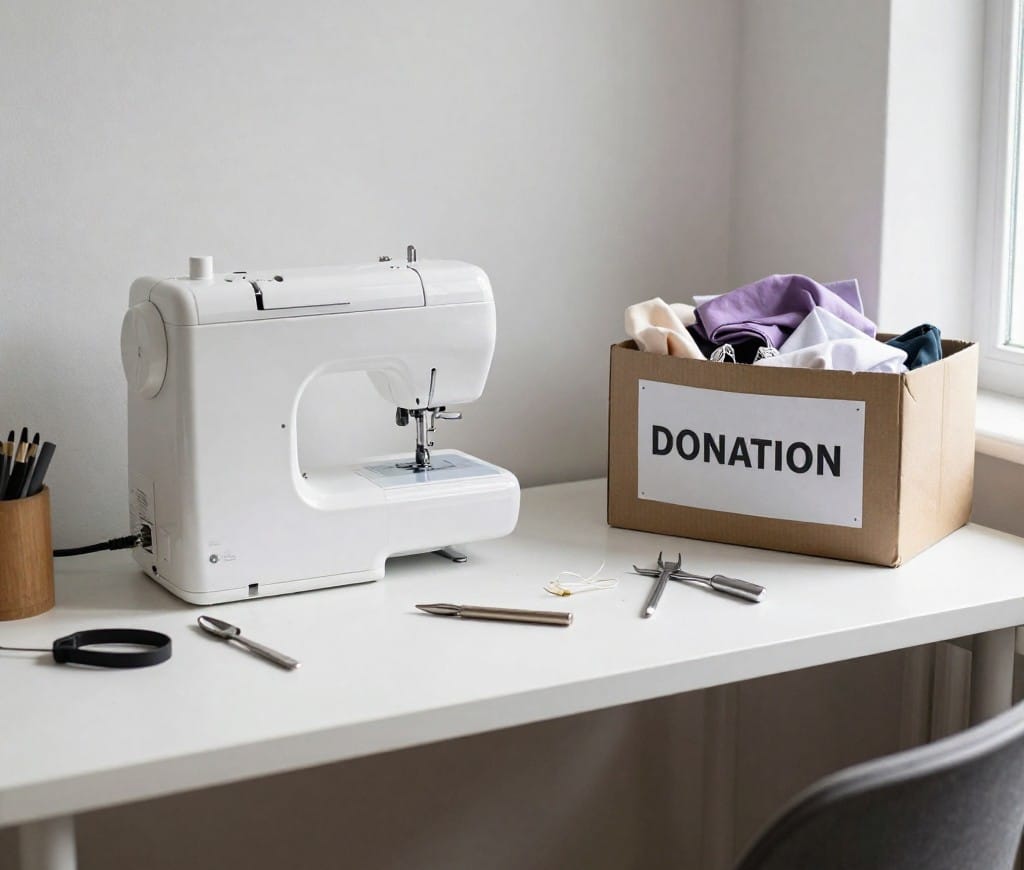
Removing unused items creates immediate space, clarity, and momentum.
Remove These Items Now
We tested this declutter list with 30 beginners—results appeared within days.
Remove immediately:
- Fabric you don't love anymore
- Broken tools (old scissors, bent pins)
- Duplicate tools (how many seam rippers do you need?)
- Projects older than one year
- Scraps smaller than 3×3 cm
- Empty thread reels
Result:
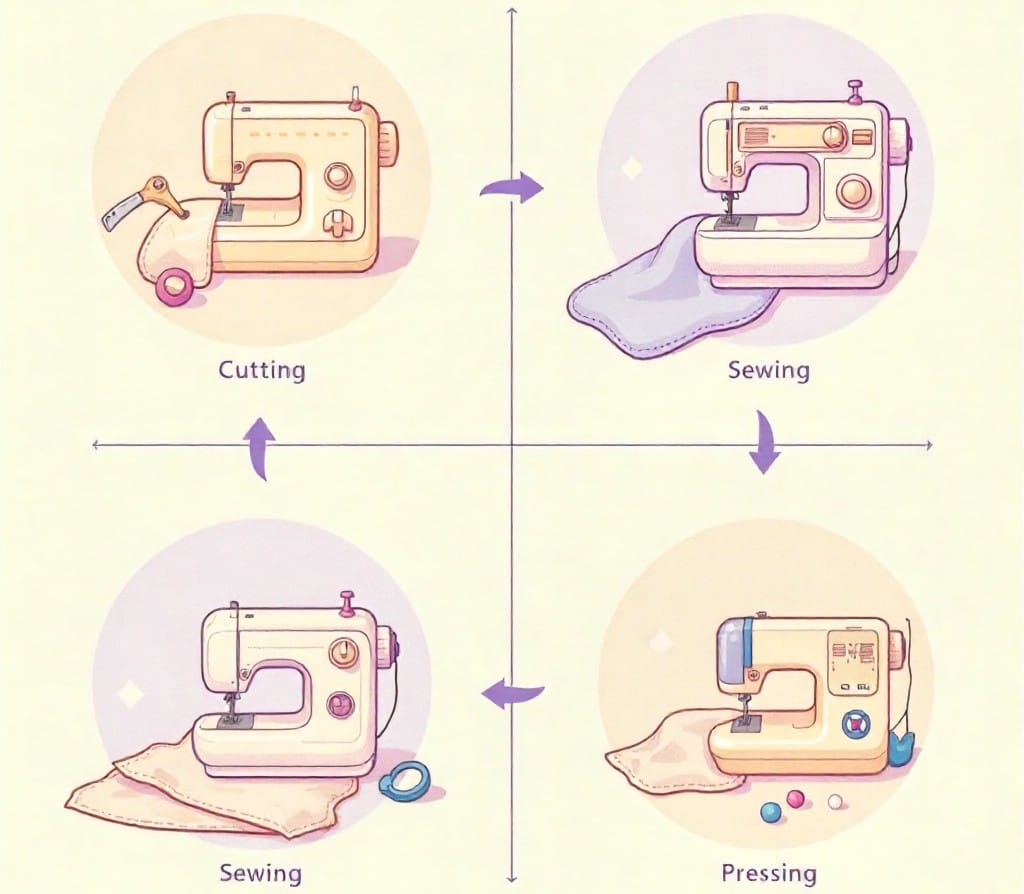
The 3-Zone Workflow
The most practical organizing rule we tested. Worked even in tiny spaces.
Zone 1: Cutting → Scissors, rotary cutter, rulers, mat
Zone 2: Sewing → Machine, bobbins, needles, threads, seam ripper
Zone 3: Pressing → Iron, board, pressing cloth
Result:
Reduced tool hunting. Worked well on kitchen tables or shared spaces.
A clear three-zone layout reduces tool hunting and keeps projects moving smoothly, even in small spaces.
Test Results: What Made the Biggest Difference?
10-Minute Reset Rule
Highest impact, lowest effort
Vertical Storage
Most dramatic transformation
Category Sorting
Greatest long-term success
3-Zone Workflow
Biggest time-saver for beginners
Declutter List
Biggest mental clarity boost
Mistakes That Sabotage an Organization
- Buying storage before organizing — Always organize first, then buy
- Hiding everything in boxes — If you can’t see it, you forget it
- Complicated labelling — If it takes 10+ seconds, you won’t maintain it
- Keeping fabric “just in case” — If unused for 2 years, bin it
- Open shelving when you’re not tidy — Baskets hide chaos better
Patterns